
📅 August 28, 2026 | 👤 Author: Gavin
💡 Key Takeaways for Fleet Operators
- Primary Application: Heavy-duty swing (slewing) systems on 20-to-30-ton class crawler excavators, such as the Komatsu PC200-8, Caterpillar 320D, and Hitachi ZX200-3.
- The Diagnostic Core: Swing drift (uncontrolled cab rotation when stopped on a slope) or harsh metallic vibrations are typically caused by worn swing brake friction discs, hydraulic leakage across the swing motor valve plate, or misadjusted port relief valves.
- Tatan Professional Engineering Standard: To eliminate rotational play and dynamic drift, Tatan Machinery supplies OEM-grade swing motors, robust planetary gearboxes, and complete hydraulic seal kits. Our pinion gears and shaft assemblies are induction-hardened to HRC 58-62, providing reliable wear resistance under heavy rotational shock loads.
The Mechanics of Swing Control: Hydraulic Torque vs. Inertial Load
In heavy earthmoving and infrastructure operations, the excavator’s upper structure is constantly starting, rotating, and stopping. This cycle puts extreme structural and hydraulic stress on the swing system. Unlike the travel system, which stops when fluid flow is cut, the swing system must manage the massive inertial load of the rotating cabin, boom, and loaded bucket.
When an operator releases the swing joystick, the heavy upper structure wants to continue rotating due to kinetic energy. The hydraulic swing motor must act as a dynamic brake to bring the cabin to a controlled stop. If the hydraulic system fails to manage this energy, two primary symptoms develop:
- Swing Drift (Excessive Slewing Play): The cab slides past the intended dump area, or the upper structure rotates on its own when the machine is parked on a slope.
- Weak Swing Action: The excavator struggles to swing uphill or feels slow and sluggish, even when the engine runs at full throttle.
To prevent high repair bills and minimize downtime, fleet managers and mechanics need to systematically isolate hydraulic leakage from mechanical gearbox wear.
Anatomy of the Swing System: Motor, Gearbox, and Relief Valves
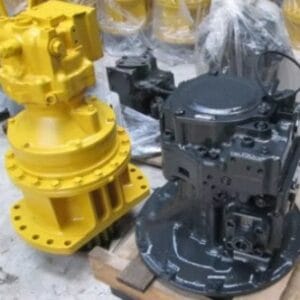
A professional slewing system consists of three distinct sections that must work in harmony to control rotation:
1. The Hydraulic Swing Motor
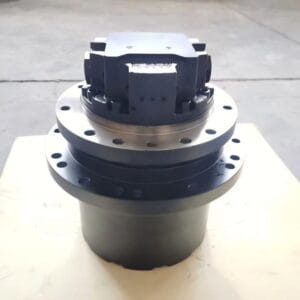
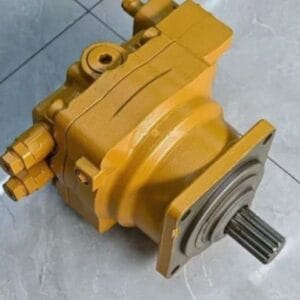
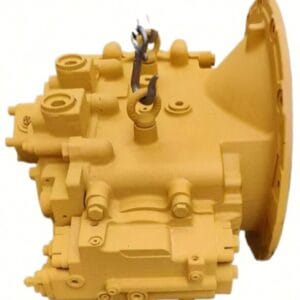
This is a fixed-displacement axial piston motor. It features an integrated, spring-applied, hydraulically released multi-disc parking brake and a dual-port relief valve block. These relief valves—also known as cushion valves—absorb hydraulic shock during deceleration.
2. The Planetary Swing Gearbox (Reducer)
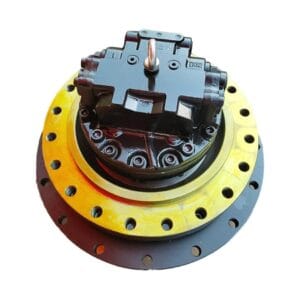
This gearbox reduces the high-speed output of the hydraulic motor to a low-speed, high-torque output. The output pinion gear on the bottom of the gearbox meshes directly with the internal teeth of the large swing bearing.
3. The Swing Bearing (Slewing Ring)
A large ball-bearing assembly that connects the undercarriage to the upper frame, allowing 360-degree rotation. It relies on a heavy-duty dust seal (the swing bearing seal) to protect the internal ball tracks from dirt and water.
Official OEM Test Specifications: Komatsu PC200-8 vs. Caterpillar 320D
When diagnosing swing drift, guessing is not an option. Mechanics should rely on official testing parameters defined by original equipment manufacturers to determine if the motor or valve block is worn beyond limits.
Komatsu PC200-8 Swing System Testing Standards
According to the official Komatsu PC200-8 Shop Manual (available via the Komatsu Service Portal):
- Standard Swing Relief Valve Pressure: Must register between 27.5 and 29.4 MPa (280 to 300 kg/cm²) at high idle.
- Maximum Allowable Swing Drift (Slewing Drift): When stopped on a 15-degree slope with a full bucket at maximum reach, the upper structure’s rotation drift must not exceed 100 mm within 5 minutes.
- Swing Motor Case Drain Flow Limit: With the hydraulic oil temperature at 45 to 55 degrees Celsius, the case drain leakage must not exceed 18 liters per minute (L/min) during maximum stall pressure.
Caterpillar 320D Swing System Testing Standards
According to the official Caterpillar Service Information System (SIS) (accessible via the Caterpillar Parts & Service Portal):
- Standard Swing Relief Valve Pressure: Strictly set to 26.0 MPa (3,770 psi).
- Parking Brake Release Pressure: The brake release piston requires a minimum pilot pressure of 3.0 MPa (435 psi) to disengage the brake discs fully.
- Standard Drift Specification: Under standard load conditions, the upper structure drift must be virtually unnoticeable, remaining within a margin of 50 mm over a 3-minute hold.
If your machine exceeds these official wear limits, internal components must be serviced. You can find direct-fit, high-performance replacements on the Tatan Machinery Homepage.

Step-by-Step Field Diagnostics: Is Your Swing Drifting Internally?
To determine if a swing drift issue is caused by the motor’s valve plate or the relief valves, use this systematic troubleshooting guide:
Step 1: Perform the Mechanical Swing Lock Test
Engage the physical swing lock pin or electronic swing lock switch in the cabin. Gently attempt to cycle the swing joystick.
- Diagnostic Result: If the cab still rotates or feels loose, the planetary gear teeth or the output pinion gear are stripped, or the swing bearing bolts are loose. If the cab remains locked, the mechanical gears are sound, and the issue is hydraulic.
Step 2: Swap the Left and Right Cushion Relief Valves
If the excavator drifts only when swinging in one direction (e.g., stops fine when swinging left, but drifts when swinging right):
- Locate the dual port relief valves on the swing motor block.
- Swap the left-side relief valve cartridge with the right-side relief valve cartridge.
- Operate the machine. If the drift switches directions, the relief valve cartridge is defective or dirty and must be replaced.
Step 3: Check Swing Gearbox Oil Level and Case Drain Flow
Unscrew the swing gearbox dipstick or inspection plug.
- Diagnostic Result: Inspect the oil. If it is milky, water has bypassed the upper seals. If the oil is black and smells extremely burnt, the internal brake discs are dragging. If there is no oil, the bottom shaft oil seal has failed, and the gear oil has leaked into the slewing ring cavity.
Technical Specifications: Swing Pressure Limits for Major Excavators
When sourcing replacement parts, ensuring correct relief valve settings is critical to preventing damage to hydraulic hoses and motor housings.
| Excavator Model | Swing Motor Model | Swing Relief Pressure Spec | Swing Gearbox Oil Spec | Key Maintenance Part |
|---|---|---|---|---|
| Komatsu PC200-8 | Komatsu KMF90 | 27.5 MPa | SAE 90 Gear Oil | Swing motor friction plates, output shaft oil seals. |
| Caterpillar 320D | Cat / Rexroth M5X130 | 26.0 MPa | SAE 80W-90 | Swing relief valves, brake piston O-ring kits. |
| Hitachi ZX200-3 | Kayaba (KYB) MSG-44P | 28.5 MPa | SAE 90W-140 | Pinion shaft bearings, swing bearing dust seals. |
Expert Q&A for Heavy Equipment Mechanics
Q1: Why does my excavator rotate normally on flat ground, but fails to swing up an incline or slope?
A: This is a classic symptom of worn motor pistons or a scored distributor valve plate inside the swing motor’s hydraulic section. When swinging up a hill, the hydraulic pressure required to move the cab increases dramatically (often reaching the maximum relief setting). If the internal clearances inside the swing motor exceed 0.005 mm, the high-pressure oil will bypass the pistons and leak directly back to the tank via the case drain line instead of rotating the motor, leaving the machine powerless on slopes.
To find premium swing motor rotary groups, friction discs, and complete swing reducers, visit the Tatan Machinery Homepage.
Q2: What happens if I use standard hydraulic oil instead of heavy gear oil in my planetary swing gearbox?
A: Standard hydraulic oil (ISO VG 46) does not have the extreme-pressure (EP) additives or the viscosity needed to protect heavily loaded planetary gears. Using hydraulic oil in the gearbox will cause immediate metal-to-metal contact, leading to rapid gear tooth pitting, gear teeth shearing, and complete gearbox failure within a few days of operation. Always use a dedicated gear lubricant like SAE 80W-90 or SAE 90.
Keep Your Excavator Swing Systems Operating with Precision
Avoiding costly job-site downtime requires sourcing components manufactured to exact engineering tolerances. Whether you need a replacement swing motor rotary group, a complete planetary swing gearbox, high-durability swing shaft gears, or engine rebuild components like pistons and plateau-honed liners, Tatan Machinery provides reliable, OEM-standard parts.
To explore our full inventory of swing components, travel motors, and dynamic seal kits, visit Tatan Machinery and request a custom quote from our engineering support team today.
(For further reading on mobile hydraulic motor controls, consult the technical resources at SAE International or review slewing bearing maintenance guidelines from the International Organization for Standardization (ISO).)